


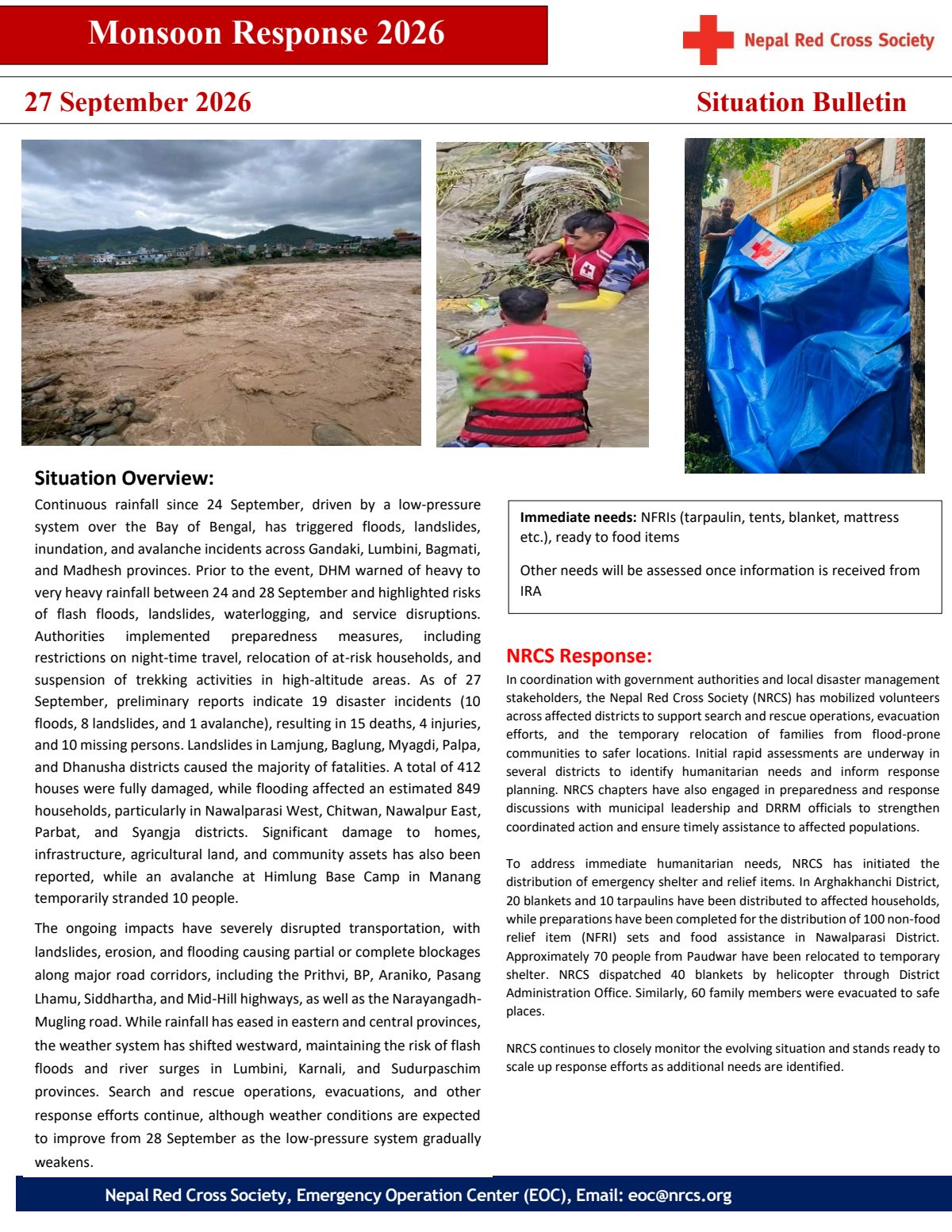
Sep 28, 2026 • 2 min read Monsoon Update, Situation Report of 27 September 2026 Situation Overview: Continuous rainfall since 24 September, driven by a low-pressure system over the Bay of Bengal, has triggered floods, landslides, inundation, and avalanche incidents across Gandaki, Lumbini, Bagmati, and Madhesh provinces. Prior to the event, DHM warned of heavy to very heavy rainfall between 24 and 28 September and highlighted risks of flash floods, landslides, waterlogging, and service disruptions. Authorities implemented preparedness measures, including restrictions on night-time travel, relocation of at-risk households, and suspension of trekking activities in high-altitude areas. As of 27 September, preliminary reports indicate 19 disaster incidents (10 floods, 8 landslides, and 1 avalanche), resulting in 15 deaths, 4 injuries, and 10 missing persons. Landslides in Lamjung, Baglung, Myagdi, Palpa, and Dhanusha districts caused the majority of fatalities. A total of 412 houses were fully damaged, while flooding affected an estimated 849 households, particularly in Nawalparasi West, Chitwan, Nawalpur East, Parbat, and Syangja districts. Significant damage to homes, infrastructure, agricultural land, and community assets has also been reported, while an avalanche at Himlung Base Camp in Manang temporarily stranded 10 people. The ongoing impacts have severely disrupted transportation, with landslides, erosion, and flooding causing partial or complete blockages along major road corridors, including the Prithvi, BP, Araniko, Pasang Lhamu, Siddhartha, and Mid-Hill highways, as well as the Narayangadh-Mugling road. While rainfall has eased in eastern and central provinces, the weather system has shifted westward, maintaining the risk of flash floods and river surges in Lumbini, Karnali, and Sudurpaschim provinces. Search and rescue operations, evacuations, and other response efforts continue, although weather conditions are expected to improve from 28 September as the low-pressure system gradually weakens. Read
Summary
and Madhesh provinces. Prior to the event, DHM warned of heavy to Other needs will be assessed once information is received from very heavy rainfall between 24 and 28 September and highlighted risks IRA of flash floods, landslides, waterlogging, and service disruptions. Aut horities implemented…
Auto-generated and may contain errors. Check the original notice before you act on it.
Files
- b9f6f687-b919-41b2-a383-f86fcfd4bfbc.pdfPDF · 1 page · 409 KBOpen
Key details
- Organization
- Nepal Red Cross Society
- Industry
- NGO/INGOs
- Category
- Reports
- Published
- Notice date
- Fiscal year
- FY 2083/84
- Source
- View on the original website
Text extracted automatically from the notice (may contain errors)
Monsoon Response 2026 27 September 2026 Situation Bulletin Situation Overview: Con tinuous rainfall since 24 September, driven by a low-pressure Immediate needs: NFRIs (tarpaulin, tents, blanket, mattress system over the Bay of Bengal, has triggered floods, landslides, etc.), ready to food items inundation, and avalanche incidents across Gandaki, Lumbini, Bagmati, and Madhesh provinces. Prior to the event, DHM warned of heavy to Other needs will be assessed once information is received from very heavy rainfall between 24 and 28 September and highlighted risks IRA of flash floods, landslides, waterlogging, and service disruptions. Aut horities implemented preparedness measures, including NRCS Response: restrictions on night-time travel, relocation of at-risk households, and suspension of trekking activities in high-altitude areas. As of 27 In coordination with government authorities and local disaster management Sep tember, preliminary reports indicate 19 disaster incidents (10 stakeholders, the Nepal Red Cross Society (NRCS) has mobilized volunteers across affected districts to support search and rescue operations, evacuation floods, 8 landslides, and 1 avalanche), resulting in 15 deaths, 4 injuries, efforts, and the temporary relocation of families from flood-prone and 10 missing persons. Landslides in Lamjung, Baglung, Myagdi, Palpa, communities to safer locations. Initial rapid assessments are underway in and Dhanusha districts caused the majority of fatalities. A total of 412 several districts to identify humanitarian needs and inform response houses were fully damaged, while flooding affected an estimated 849 planning. NRCS chapters have also engaged in preparedness and response households, particularly in Nawalparasi West, Chitwan, Nawalpur East, discussions with municipal leadership and DRRM officials to strengthen coordinated action and ensure timely assistance to affected populations. Parb at, and Syangja districts. Significant damage to homes, infrastructure, agricultural land, and community assets has also been To address immediate humanitarian needs, NRCS has initiated the reported, while an avalanche at Himlung Base Camp in Manang distribution of emergency shelter and relief items. In Arghakhanchi District, tem porarily stranded 10 people. 20 blankets and 10 tarpaulins have been distributed to affected households, while preparations have been completed for the distribution of 100 non-food The ongoing impacts have severely disrupted transportation, with relief item (NFRI) sets and food assistance in Nawalparasi District. landslides, erosion, and flooding causing partial or complete blockages Approximately 70 people from Paudwar have been relocated to temporary alon g major road corridors, including the Prithvi, BP, Araniko, Pasang shelter. NRCS dispatched 40 blankets by helicopter through District Administration Office. Similarly, 60 family members were evacuated to safe Lhamu, Siddhartha, and Mid-Hill highways, as well as the Narayangadh- places. Mugling road. While rainfall has eased in eastern and central provinces, the weather system has shifted westward, maintaining the risk of flash NRCS continues to closely monitor the evolving situation and stands ready to floo ds and river surges in Lumbini, Karnali, and Sudurpaschim scale up response efforts as additional needs are identified. provinces. Search and rescue operations, evacuations, and other response efforts continue, although weather conditions are expected to improve from 28 September as the low-pressure system gradually weakens. Nepal Red Cross Society, Emergency Operation Center (EOC), Email: [email protected]
 Like
0
 Views
1
 Comments
0
 Share
0

Save

Report